AI Overview Checker is the free AI rank checker for one query; SE Visible by SE Ranking tracks the answer and its sources. Compare 12 AI rank checkers.
The best AI rank checker for one query in 2027 is AI Overview Checker, a free AI Overview checker that shows whether Google answers with an AI Overview, which sites it cites, and your site’s organic position. To track answers across engines, the pick is SE Visible by SE Ranking: it keeps the dated answer and its sources behind every position number. Profound fits enterprise comms programs that need claim checks on Enterprise, Peec AI suits teams checking answers against their own fact list, Otterly.AI covers a light daily read with a page audit, and Semrush AI Visibility Toolkit adds sentiment and narratives to an existing SEO suite. The full comparison is below.
“Where do we rank in AI?” now reaches comms desks for a reason: among the 55 percent of respondents who use generative AI platforms, 91 percent use them for shopping, including researching brands. A position alone says nothing about what the answer claimed or which source it leaned on, so the twelve tools below are judged on what their “rank” actually measures.
What should a comms team report instead of a single AI rank?
A position inside an AI answer is one run of one engine on one day. Report four things instead: how often the brand is named, where it sits across repeated runs, what the answer claims, and which sources the engine leans on.
Tools don’t agree that AI search rankings exist: one tracker below ranks brands daily, another counts how often you’re named. A slot is exposure; the claim decides damage. In a March 2025 news-citation test, eight AI search tools provided incorrect answers to more than 60 percent of queries.
How I judged the twelve:
- What the “rank” measures
- Whether the dated answer and its sources are kept
- Whether a comms lead can defend it to leadership
Is one free AI rank check enough before a leadership briefing?
A free AI rank checker shows what one engine said about one query, in one market, on one day. It can’t show a pattern over time. Before you brief leadership, you need repeated runs and the dated sources behind each answer.
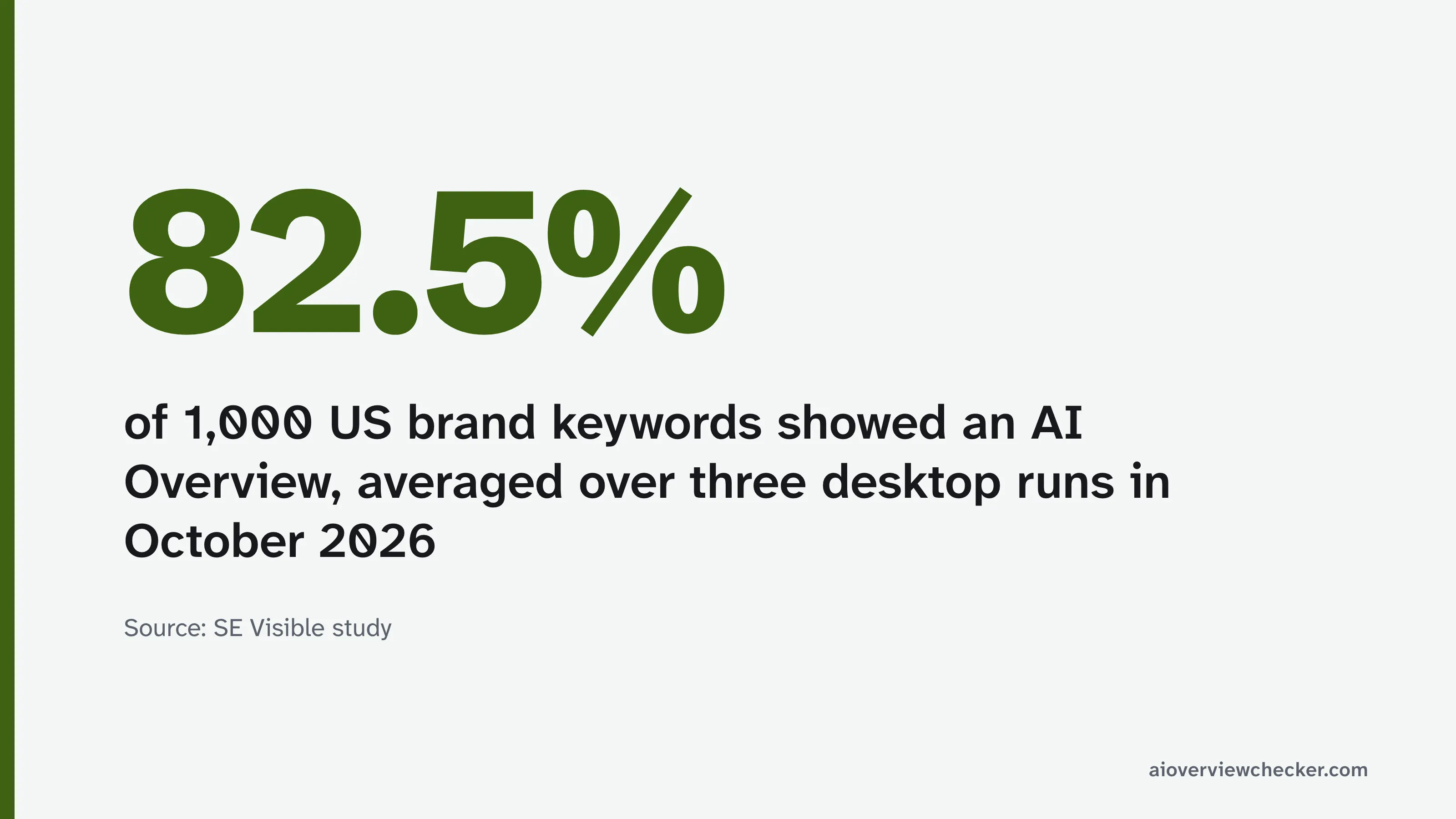
An SE Visible study checked 1,000 US brand keywords three times on desktop in October 2026 and found AI Overviews on 827, 827, and 820 of them, 82.5% on average. Even the count moved between runs.
The sources matter more than the count: 61% of those overviews’ citations came from platforms the brand manages or can publish on. You can update that material, but one check won’t show which pages the engine leans on.
The 12 AI rank checkers and tracking tools, side by side
Read the “rank” column first. An AI rank tracking tool can count a citation, an average position, a share of answers, or a source’s weight. Engine and history columns show each tool’s scope.
| # | Tool | What its “rank” measures | AI engines | History kept | Starting price |
|---|---|---|---|---|---|
| 1 | AI Overview Checker | Citation, organic position | Google AI Overviews | None | Free |
| 2 | SE Visible by SE Ranking | Average position, share of voice | ChatGPT, Gemini, Google AI Mode, Google AI Overviews | Kept, daily by default | Free trial |
| 3 | Profound | Mentions, claims checked on Enterprise | Up to 10 on Enterprise | Unlimited history on Enterprise | Free trial; Enterprise custom |
| 4 | Peec AI | Mentions, facts held against answers | 3 chosen engines | Daily history | From $95/mo |
| 5 | Otterly.AI | Mentions, cited domains | 3 of 7, chosen | Daily history | From $29/mo |
| 6 | Semrush AI Visibility Toolkit | Presence, AI Visibility Score, sentiment | ChatGPT, AI Mode, Gemini tracking | Weekly brand read | $99/mo per user |
| 7 | Generative Pulse | Share of Answers | 7 | Trends | Demo |
| 8 | Meltwater GenAI Lens | Prevalence score | 9 | Stored outputs | Add-on; demo |
| 9 | Trakkr | Daily brand ranking | 8, no AI Mode | 1 year | $100/month |
| 10 | Evertune | AI Brand Score | 5-11 | Daily runs | $60/month |
| 11 | ZipTie | Mentions, citations | 7 | From first check | From $25.65/month |
| 12 | Bluefish | Influence Rank | 10+ | Daily runs | Demo |
The 12 best AI rank checker and tracking tools in 2027
The twelve tools below run from a free AI rank checker to platforms that keep months of dated answers, sources, and positions. The order follows that path: start with one query, then track AI search rankings with records that survive board questions.
1. AI Overview Checker
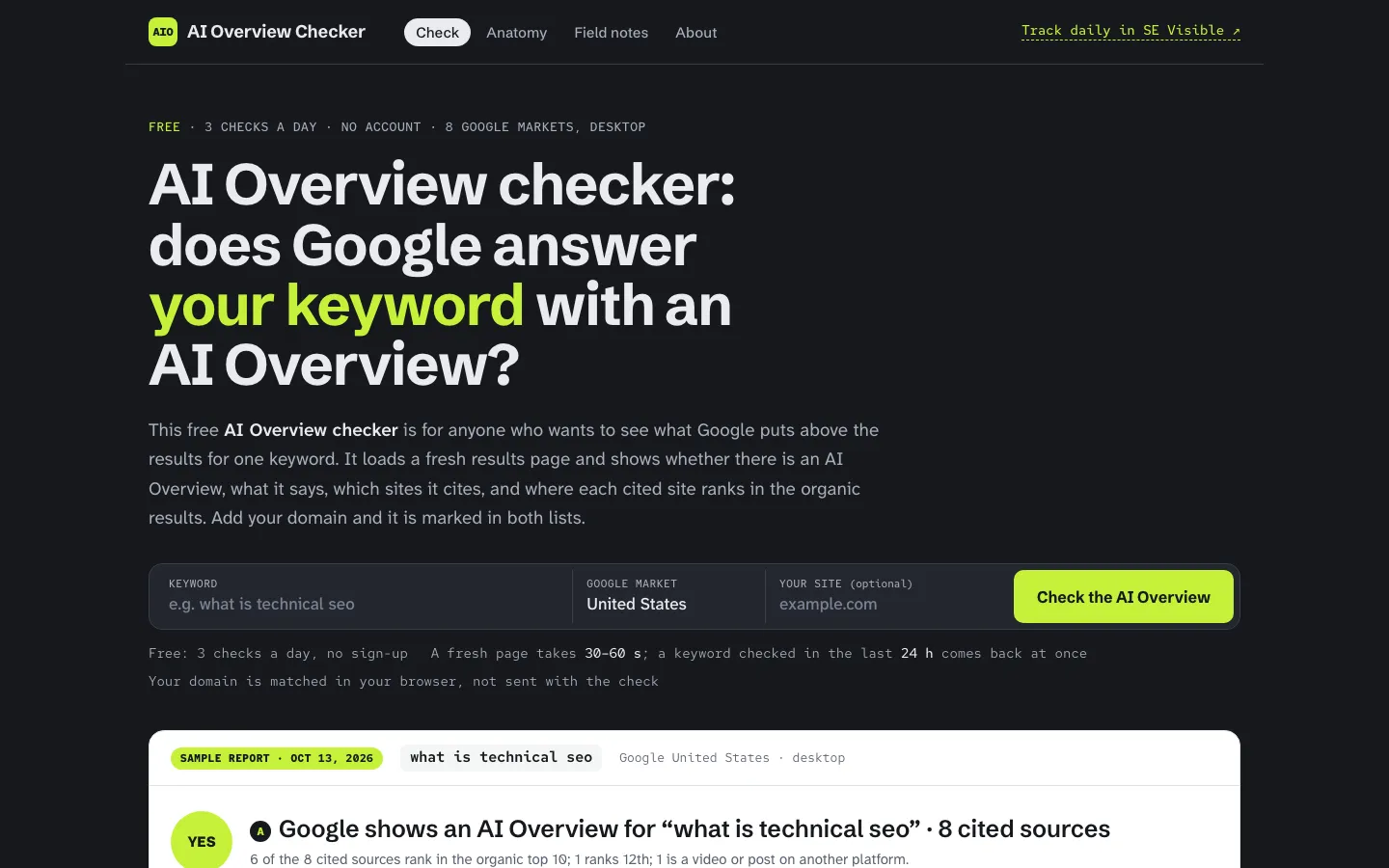
For Google alone, AI Overview Checker works as a free AI ranking checker: it shows whether an AI Overview answers your keyword and who gets the credit.
Best for: comms and search leads confirming a single query.
Standout feature: A dated read of a live Google page. For your keyword and market, the report shows the overview text and every site it cites.
Pros:
- Fetches fresh results, not an archived copy
- Marks your site among the cited sources and the organic results
- Lists People also ask and the top ten organic results
Cons:
- Covers Google AI Overviews only, on desktop, in eight markets
- Checks one keyword at a time, with no saved history
Pricing: Free: 3 checks a day, no sign-up.
What I’d brief: A dated first look at one query: does Google show an overview, and is your page cited? Mind the site’s own caveat: ranking well doesn’t guarantee a citation. This AI rank checker shows where you stand today; the next card is where you investigate what shapes it.
2. SE Visible
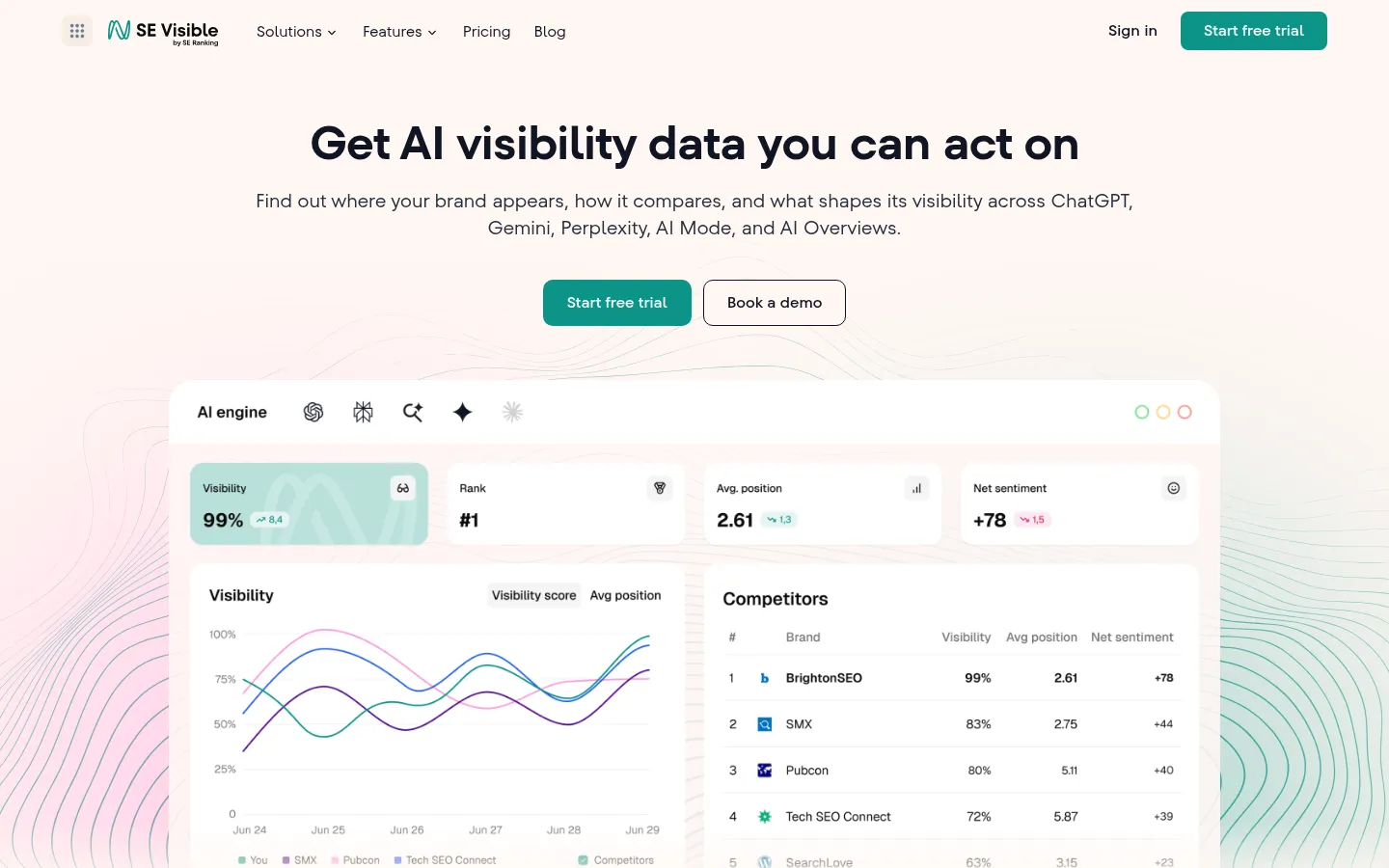
If “what does ChatGPT say about us?” now lands on the comms desk first, you need evidence a board member can question. SE Visible by SE Ranking reads AI answers through the search data behind them. It is an AI visibility platform covering ChatGPT, Gemini, Google AI Mode, and Google AI Overviews. Click any average position to open the unedited answer, dated, with its engine and market. Cited domains show domain traffic, DT, backlinks, and referring domains, so you can tier the sources the engines lean on like a media list.
Behind it is the SE Ranking team, in search for over a decade.
Best for: Communications and brand leaders reporting on AI answers across markets.
Standout feature: The average position per engine has its own trend line beside your competitors, and the visibility score accounts for where the brand appears in the answer. That turns AI visibility tracking into a pattern you can brief.
Pros:
- See each cited URL’s traffic and whether it links to you
- Compare share of voice with competitors, engine by engine
- Filter cited URLs by “Is my brand mentioned?” or by Gap score
- Pull data via Looker Studio or the API, on all plans
Cons:
- Still growing: Claude support is planned
- No PDF export yet; richer reports go out via CSV, Looker Studio, and the API
- Scope is AI answers; site audits live in SE Ranking
Pricing: Free trial available; plan prices are listed on the SE Visible site.
What I’d brief: SE Visible puts the answer, its sources, and their search metrics side by side. It won’t make the call for you, but it narrows it: which publication to brief, which page to update, what to recheck.
3. Profound
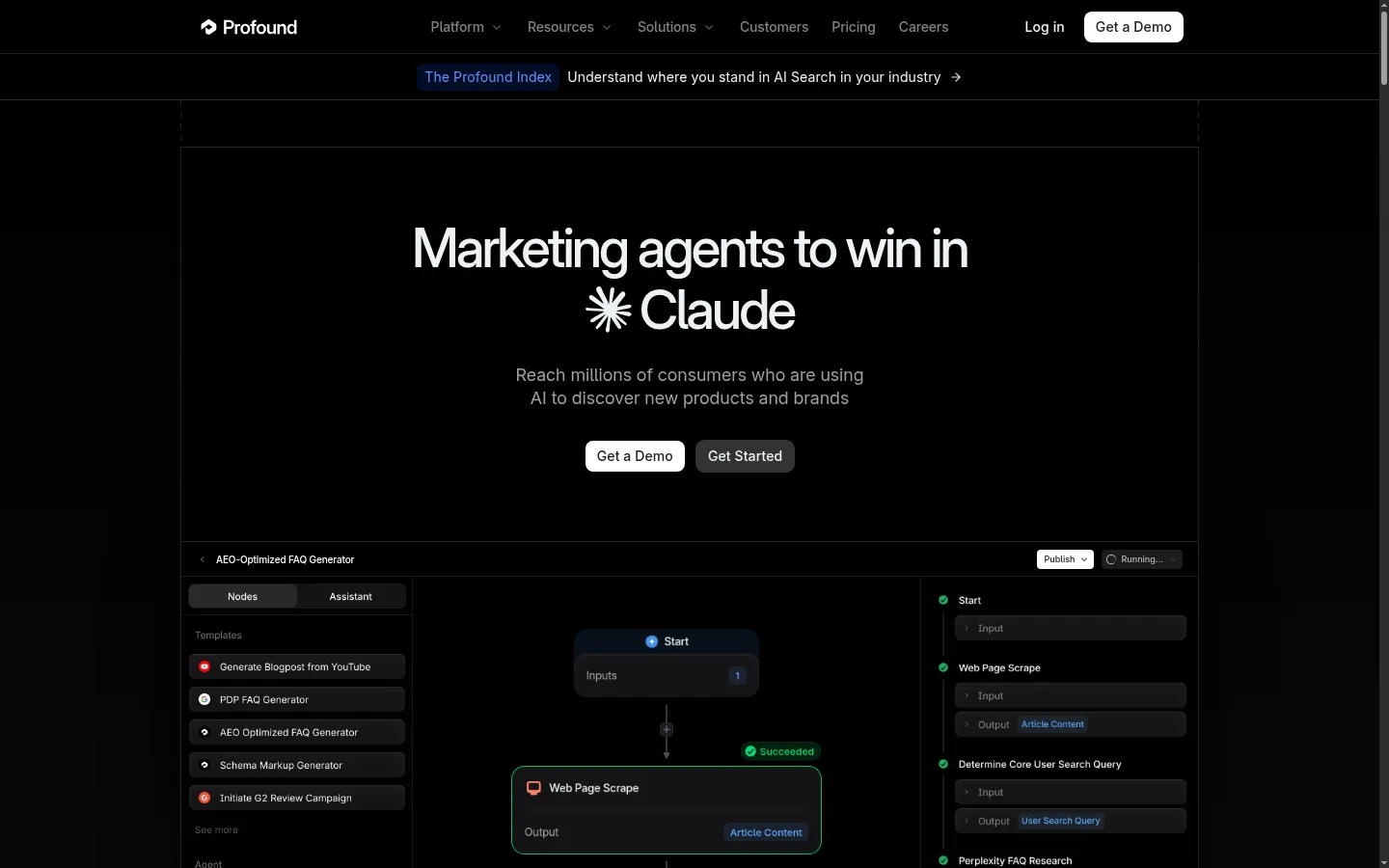
Profound tracks AI answers across up to 10 engines and, on Enterprise, checks the claims in them.
Best for: enterprise comms teams that must clear legal and IT review.
Standout feature: FactCheck on Enterprise tests each claim against a knowledge base your team keeps and links an inaccurate one to the URL behind it, which turns a rank question into a source question.
Pros:
- Clears SSO/SAML and SOC 2 checks
- Keeps unlimited history on Enterprise
- Includes a 7-day trial at 50 prompts a day
Cons:
- Quotes Enterprise privately
- Runs the trial on one language and region
Pricing: Free trial (50 prompts daily for 7 days); Enterprise custom.
What I’d brief: Bring Profound in when leadership wants claims checked at scale. Use the trial to see the answers first, then decide whether FactCheck justifies the quote.
4. Peec AI
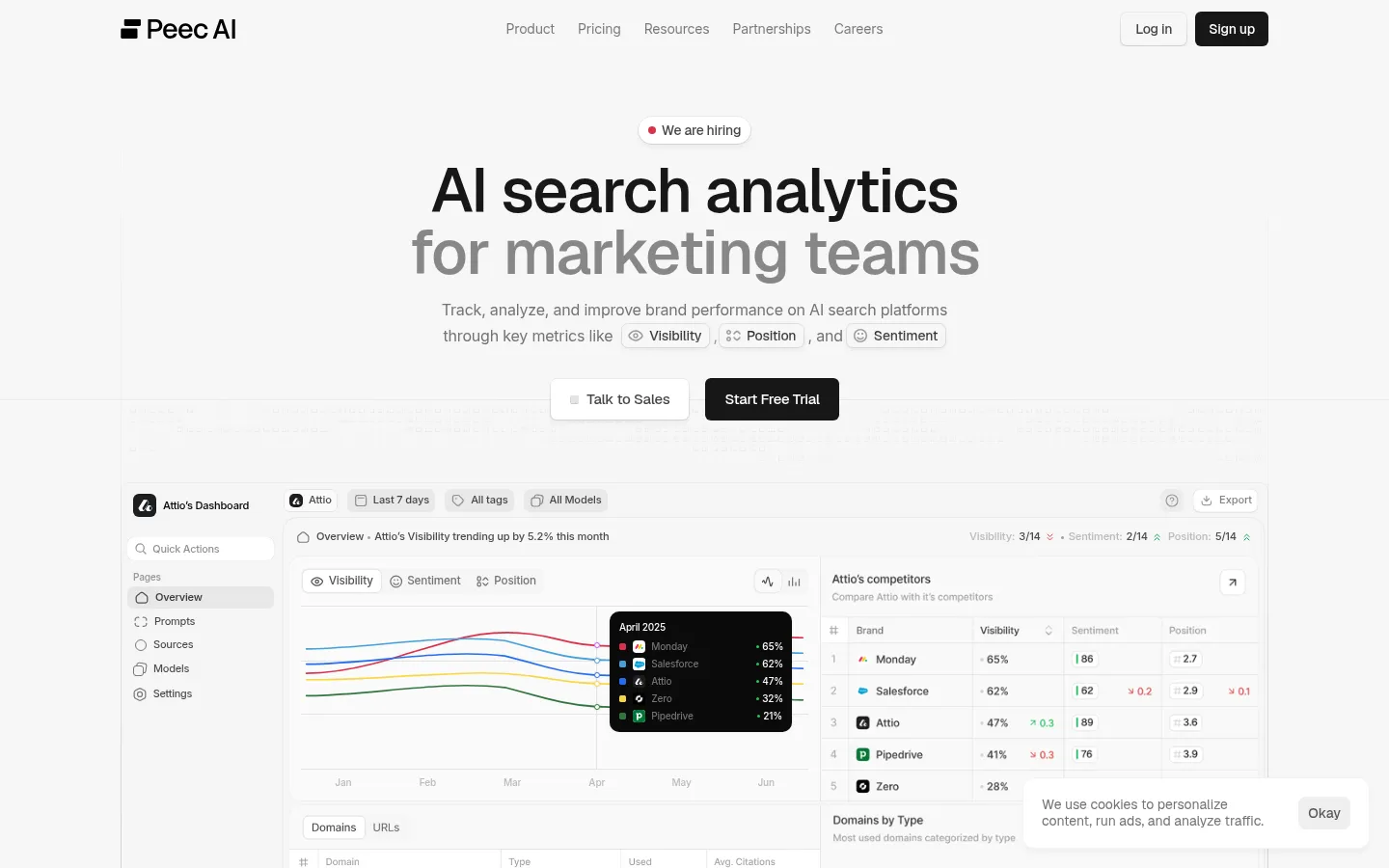
Peec AI checks AI answers against a list of facts the brand keeps, on three engines you choose.
Best for: comms teams with a short, stable fact sheet.
Standout feature: Brand Perception fact-checks 5 to 25 prompts against 5 to 50 facts per brand below Enterprise, and Objections groups the recurring arguments AI raises about the company.
Pros:
- Includes unlimited users
- Classifies cited sources by type
- Opens the API from Pro
Cons:
- Three models below Enterprise
- One country on Starter
Pricing: Starter $95/mo, Pro $245/mo, Advanced $495/mo, Enterprise custom.
What I’d brief: Load the facts that would hurt most if engines got them wrong, then report the misses, not a rank.
5. Otterly.AI
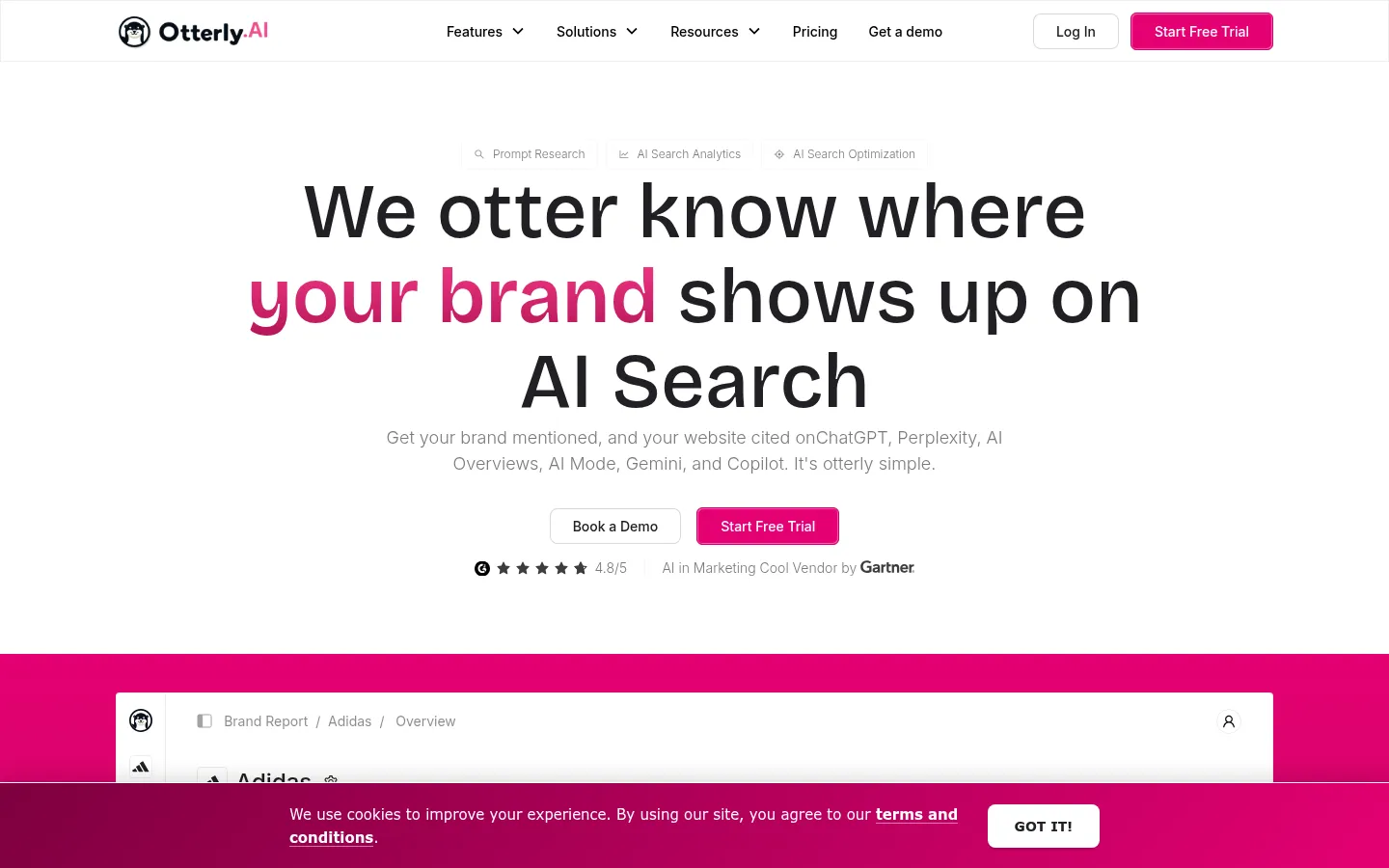
Otterly.AI is a credit-priced AI answer monitor with a page audit built in.
Best for: comms teams that want a light daily read across unlimited countries.
Standout feature: Every plan includes unlimited countries, languages, brands, and seats, with Domain Ranking & Citation Source Tracking showing which domains feed the answers.
Pros:
- Brand profile and sentiment on every plan
- GEO Audit crawlability and content checks
- Free trial
Cons:
- 3 of 7 engines below Enterprise
- Lite: 20 prompts, one workspace
Pricing: Lite $29/mo (20 prompts), Standard $189/mo (160), Premium $489/mo (535).
What I’d brief: A cheap daily read on the questions leadership asks about; pair it with a source review before any briefing.
6. Semrush AI Visibility Toolkit
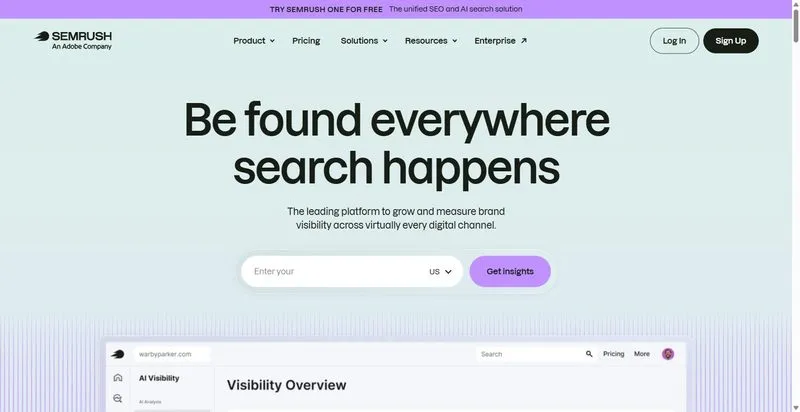
Semrush AI Visibility Toolkit adds AI presence, sentiment, and brand narratives to the suite search teams already use.
Best for: comms leads who share reporting with a Semrush-based search team.
Standout feature: An AI Visibility Score benchmarks mentions against the median of competitors it finds automatically, and Brand Performance reads narratives weekly.
Pros:
- Tracks prompts daily on ChatGPT and AI Mode
- Shows prompts where rivals get cited
- Exports 1,000 rows per CSV
Cons:
- $99 per user license
- No free trial
Pricing: $99/mo per user (25 tracked prompts, 1 project).
What I’d brief: Use its score as one line in the briefing, with the narrative read beside it, never as the whole answer.
7. Generative Pulse
Generative Pulse, a Muck Rack company, measures how seven AI engines describe your brand and which sources shape that description.
Best for: PR teams already working from Muck Rack media data.
Standout feature: The SEEN framework (Share of Answers, Evaluation, Error Rate, Narrative) ties each finding to its exact answer, cited passage, and source date.
Pros:
- Covers seven engines, including Claude, Grok, and Google AI Mode
- Links Muck Rack journalist and outlet data to the answers
- Turns findings into prioritized briefs for earned media, owned content, or technical access
Cons:
- Reports no numeric position, so rank-first briefings need reframing
- Doesn’t state its check cadence publicly
Pricing: Not published; demo on request.
What I’d brief: When leadership asks what AI claims about us, Generative Pulse’s Error Rate and dated sources answer in comms terms. AI visibility tracking here follows claims, not slots. Ask how often prompts rerun.
8. Meltwater GenAI Lens
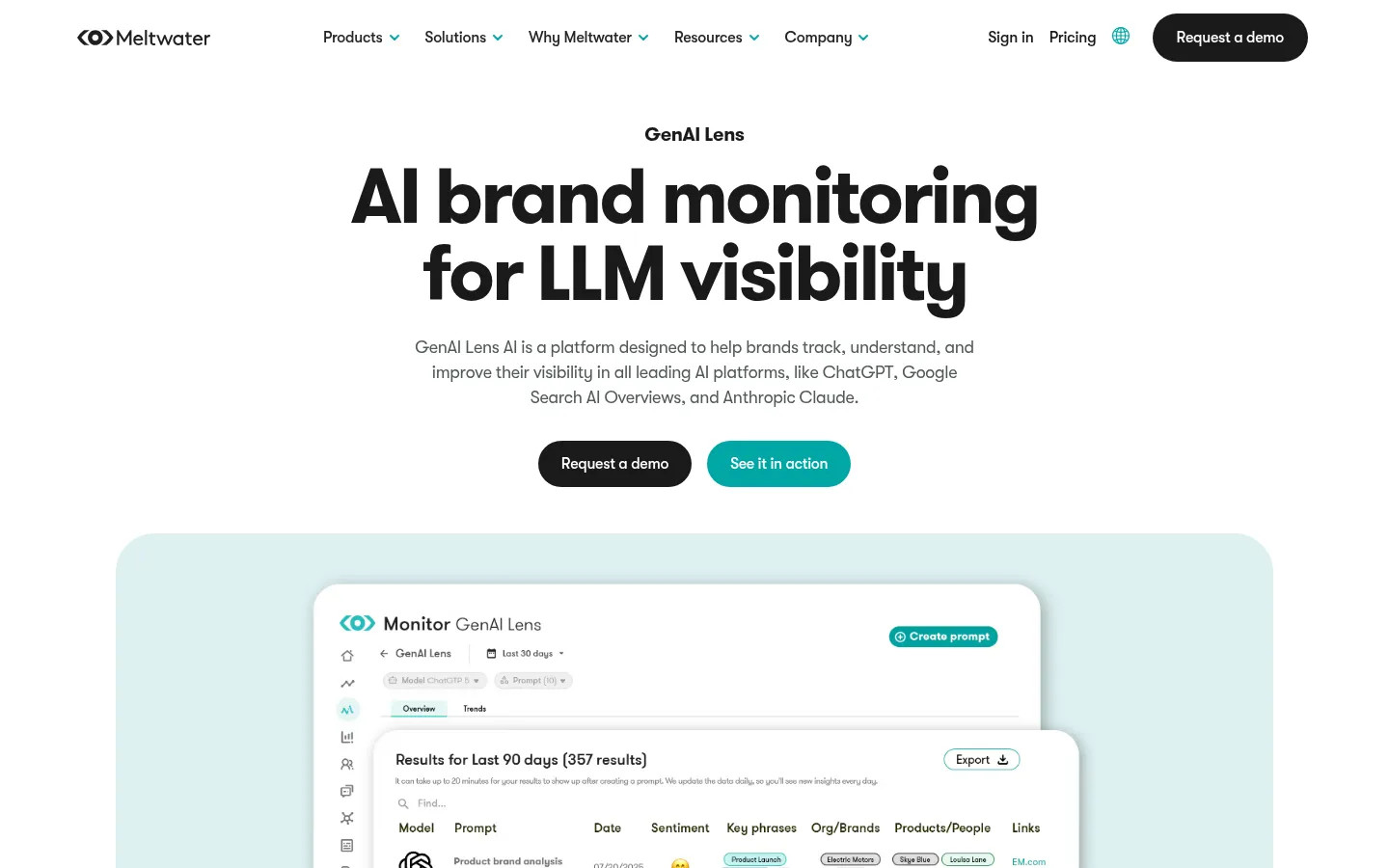
Meltwater GenAI Lens adds AI answers to the media intelligence suite a comms desk may already run for press and social.
Best for: PR and communications teams already reporting through Meltwater.
Standout feature: Instead of a slot in the answer, it scores prevalence: how often your brand appears across nine engines, ChatGPT, Claude, and Google AI Overviews among them. Prompt-based benchmarking shows where you win or lose, and source attribution covers earned media, press releases, Reddit, and Wikipedia.
Pros:
- Stores historical outputs and flags sentiment shifts
- Sets AI share of voice beside news and social data
- Shares exported findings with stakeholders
Cons:
- Typically an add-on, tied to your package
- Reports prevalence, not a numeric position
- States its refresh cycle two ways; confirm it with your account team
Pricing: By demo; usually sold as a Meltwater add-on, with no public price.
What I’d brief: Use GenAI Lens when leadership asks how present we are in AI answers, not where we rank.
9. Trakkr
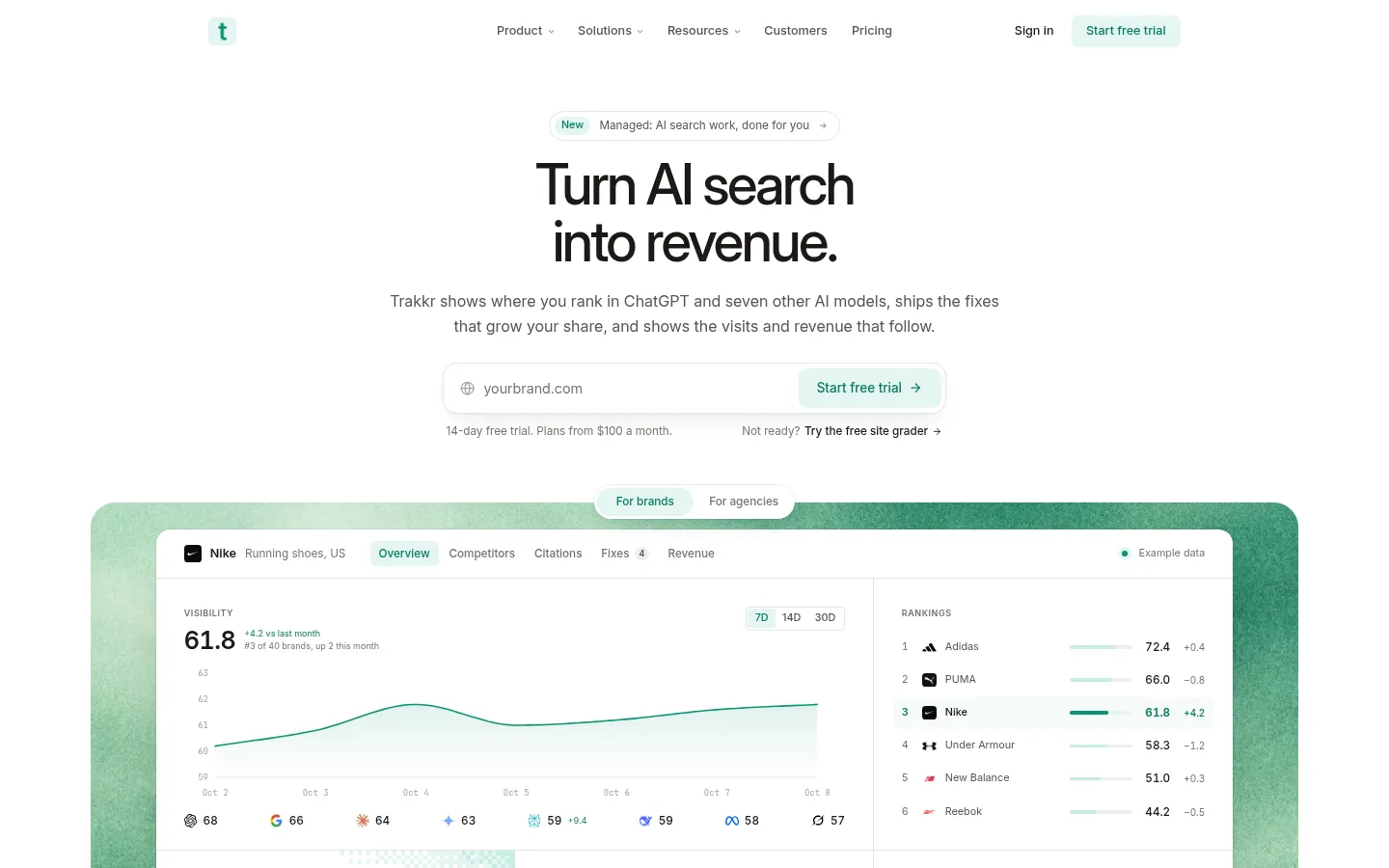
Trakkr is an AI rank tracker in the plainest sense: every rival the models name gets a numbered place daily.
Best for: one brand whose leadership wants a position before a narrative.
Standout feature: The most literal rank here: brands placed across ChatGPT, Claude, Gemini, Perplexity, Google AI Overviews, Grok, DeepSeek, and Meta AI, with higher slots weighing more in the visibility score. Growth keeps a year of history.
Pros:
- Scores how AI describes you on 20 traits
- Compares rivals on visibility and share of voice
- Adds white-label portals and the REST API on Scale
Cons:
- Its list of eight does not include Google AI Mode
- Caps Growth at 50 prompts
- Growth covers one brand; extra brands $50/month
Pricing: Growth $100/month, or $83/month billed yearly; 14-day free trial on Growth.
What I’d brief: Fine for “where are we?” Before a drop reaches the CEO, read the answers: a lower slot is exposure, not damage.
10. Evertune
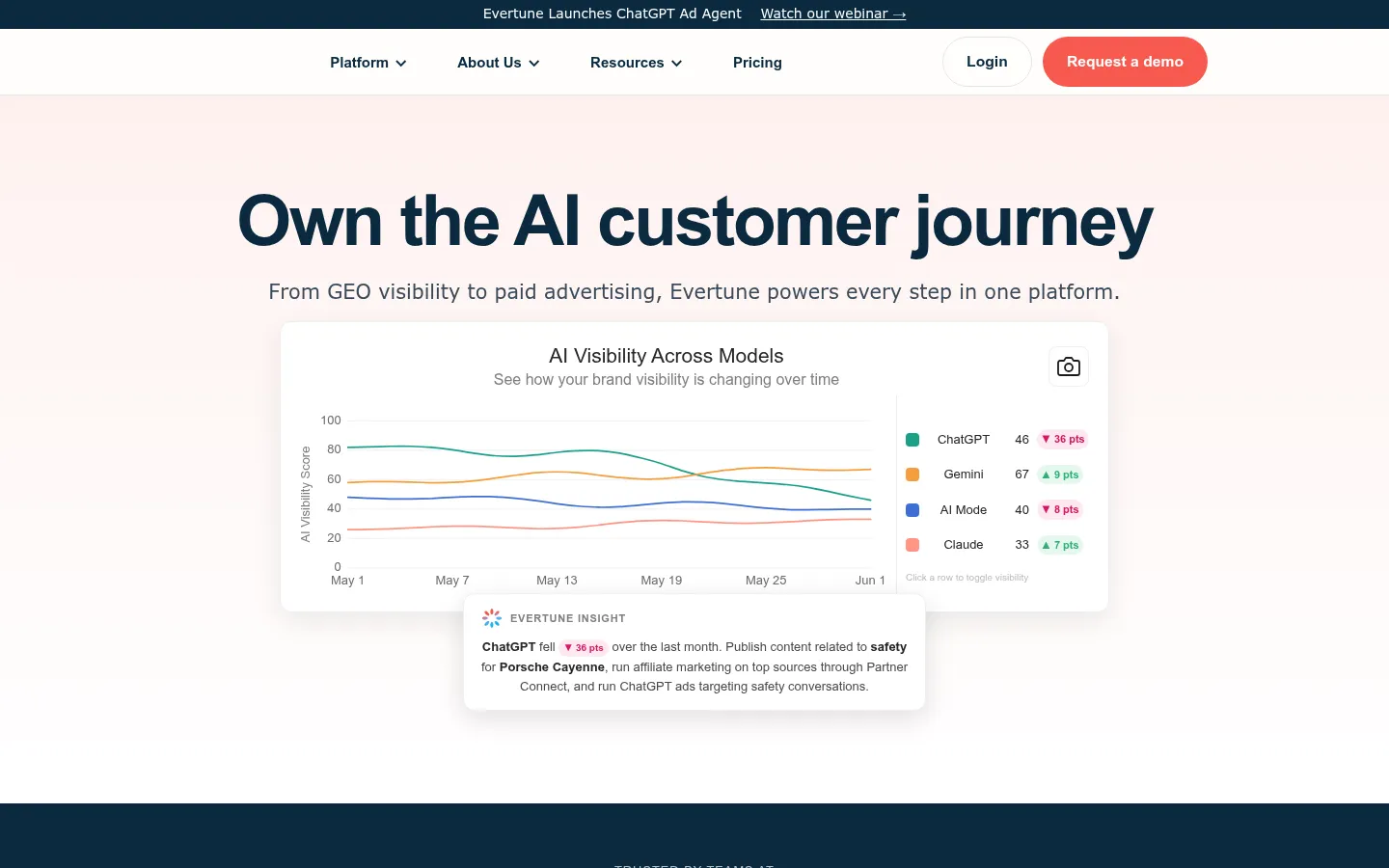
Evertune scores your brand against category rivals from repeated samples, so its “rank” is a tendency, not one answer’s order.
Best for: enterprise comms teams that want a sample size behind every claim they brief.
Standout feature: On Pro and Enterprise, each prompt runs 100 times per model. One odd reply stops being a finding. The AI Brand Score then sets your brand beside each competitor by attribute.
Pros:
- Benchmarks you against category rivals
- Grounds prompts in EverPanel, over 150 million user prompts
- Checks daily on all plans
Cons:
- Keeps 100-sample depth and 11 models on Pro and above
- Pairs Starter with an Ads Agent for ChatGPT ads
- Names no numeric in-answer position
Pricing: Starter $60/month; Pro $800/month billed annually; custom Enterprise plans.
What I’d brief: When a director asks whether a shift is real, Evertune’s sample counts give you a defensible answer. Budget for Pro if that depth is why you buy.
11. ZipTie
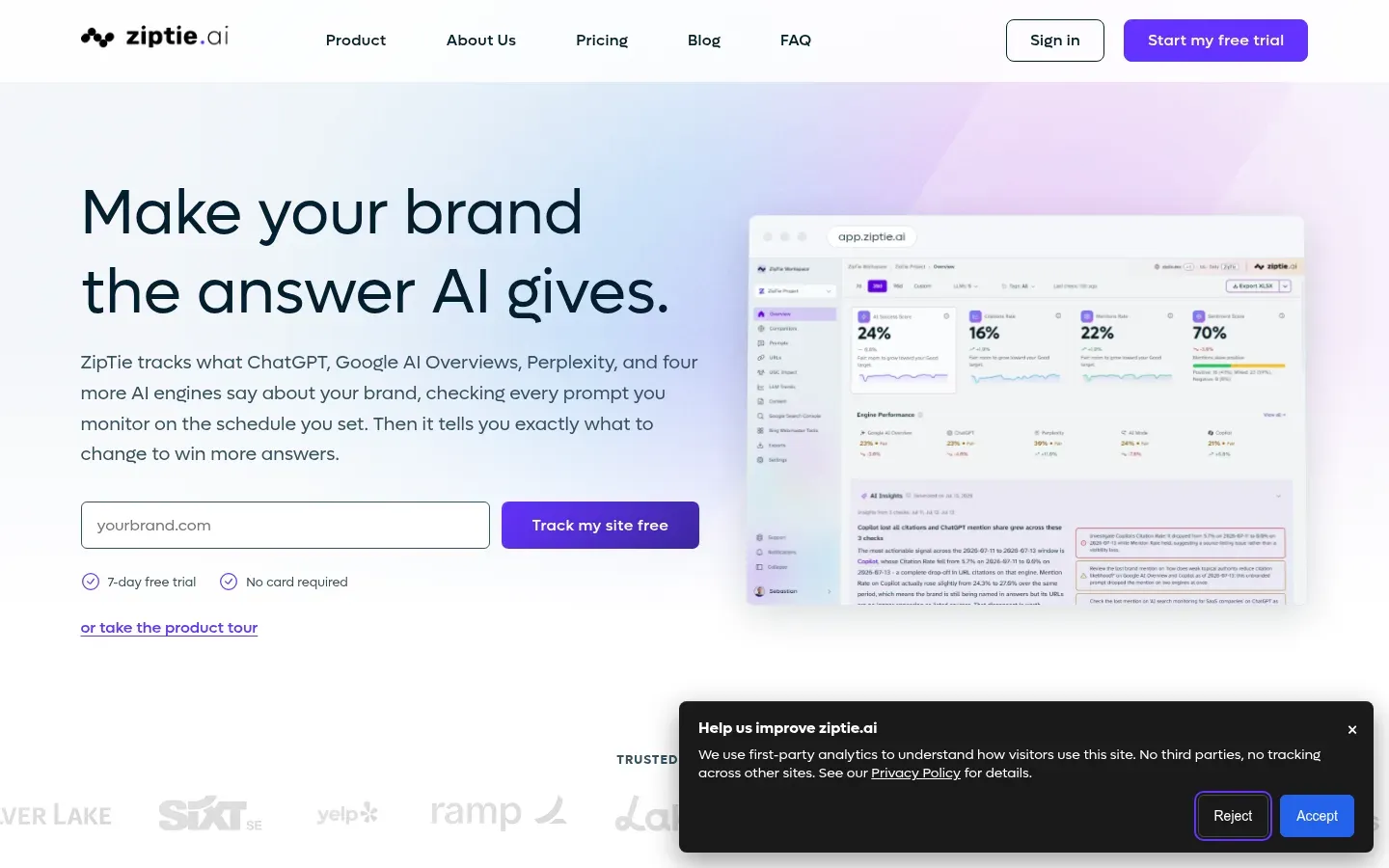
ZipTie is an AI search tracker that counts how often seven AI surfaces name and cite you.
Best for: in-house brand teams and agencies wanting repeatable figures, not placements.
Standout feature: It rejects the premise: “We don’t sell a rank in ChatGPT.” Order changes between runs, so ZipTie counts appearances across checks, and its AI Success Score folds citations, mentions, and sentiment into a 0-100 trend line.
Pros:
- Opens the answers behind every number
- Ranks your domain against rivals in your prompt set
- Includes unlimited seats and white-label reports
Cons:
- Usage-based pricing needs forecasting
- No backfill: history starts at your first check
- Engines vary by country
Pricing: From $25.65/month (Starter preset, monthly billing, usage-based); 7-day free trial with 25 daily prompts on ChatGPT, Google AI Overviews, and Copilot.
What I’d brief: Asked “where do we rank?”, brief ZipTie’s frequency with the answers behind it. Start early: the record begins with you.
12. Bluefish
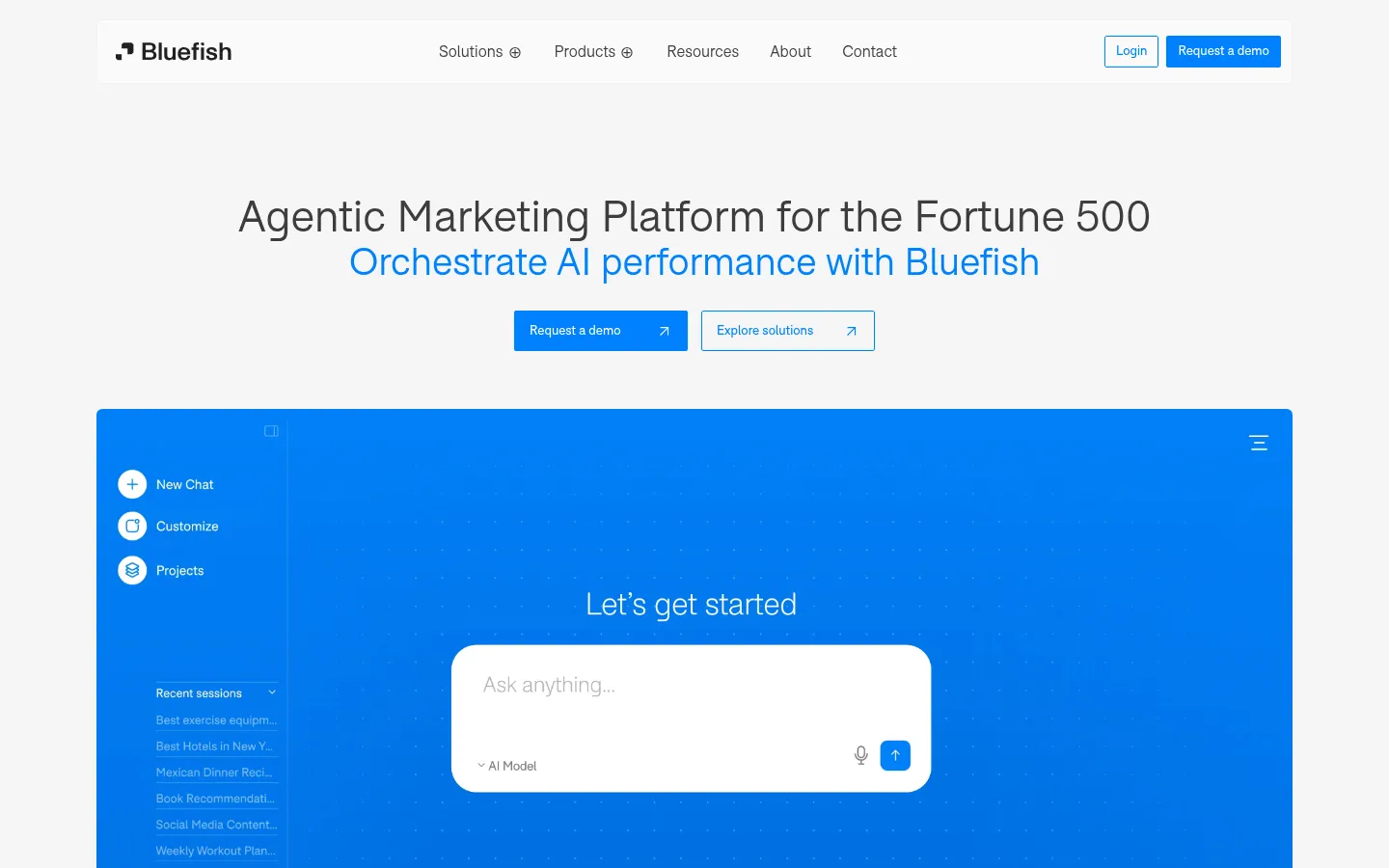
Bluefish sells an AI Monitoring Suite to Fortune 500 marketers; its “rank” scores sources, not your slot in answers.
Best for: Fortune 500 brand, PR, and content teams.
Standout feature: AI Accuracy checks every claim AI makes about your brand against a verified source of truth, then follows it to the URL it came from. A vague complaint becomes a named page.
Pros:
- Scores owned content against third-party sources with Influence Rank
- Weighs how much each source drives answers through Impact Score
- Splits share of voice by your customer personas
Cons:
- Prices sit behind a demo request
- Names “ChatGPT, Gemini, Perplexity, and other leading LLMs,” not every engine
- Influence Rank orders sources, not your position in an answer
Pricing: Not published; demo on request.
What I’d brief: Bring Bluefish in when leadership asks whether the answers are true. It checks 10+ models daily. Settle who owns the source of truth first.
Which tool fits which job on a communications team?
For a single query, use AI Overview Checker as an AI rank checker. For standing measurement of position, share of voice, and the dated answers behind them, use SE Visible. Generative Pulse and Bluefish cover how engines describe you and whether they get facts right. Trakkr gives a literal daily rank; ZipTie counts appearances.
Skip a position-only AI rank checker if leadership already asked “what did it say about us?” rather than “where are we?”
We cannot edit an engine. We can change what it reads. If your briefing needs the answer, its sources, and a date, try SE Visible: it helps you see which sources to brief first.
AI rank checker FAQ
How do I check my ranking in AI search?
Run the question in the engine your audience uses, then note the date, the market, and the sources cited. A free AI ranking checker shows one Google AI Overview. Repeat the check on at least three days before you report a position.
Is a free AI rank checker accurate enough?
A free AI rank checker is accurate for what it measured, and only that. It isn’t a trend: AI answers change between runs, so today’s position may not hold tomorrow. Treat it as a first look, then confirm with repeated runs.
How often should AI search rankings be checked?
Daily is the safer default for prompts you report on; weekly can work for slower topics. Rerun core prompts the day before you brief, so the answer, its sources, and the date in your deck are current. A tracking platform keeps that history.